Discover the best bingo casinos UK 2026 with our expert guide. Compare top sites, bonuses, mobile apps, and no-deposit offers. Bet365, Mecca, Tombola, and more reviewed. read our guide to the best bingo casinos


Colon Cancer Treatment Explained: Options, Stages, and Outlook
A colon cancer diagnosis changes everything in an instant. But here’s the part that often gets lost in the fear: colon cancer treatment today is more effective, more personalized, and more survivable than it was even a decade ago. Depending on how early it’s caught, doctors now have a full toolkit for treating colon cancer — surgery, chemotherapy, radiation, targeted drugs, and immunotherapy, and most plans are built around the specific stage, location, and genetic profile of the tumor rather than a one-size-fits-all approach.
If you or someone you love just received this diagnosis, you’re probably looking for straight answers, not medical jargon. This guide walks through exactly how treatments for colon cancer works, what influences the treatment plan, and what recovery and prognosis realistically look like, stage by stage.
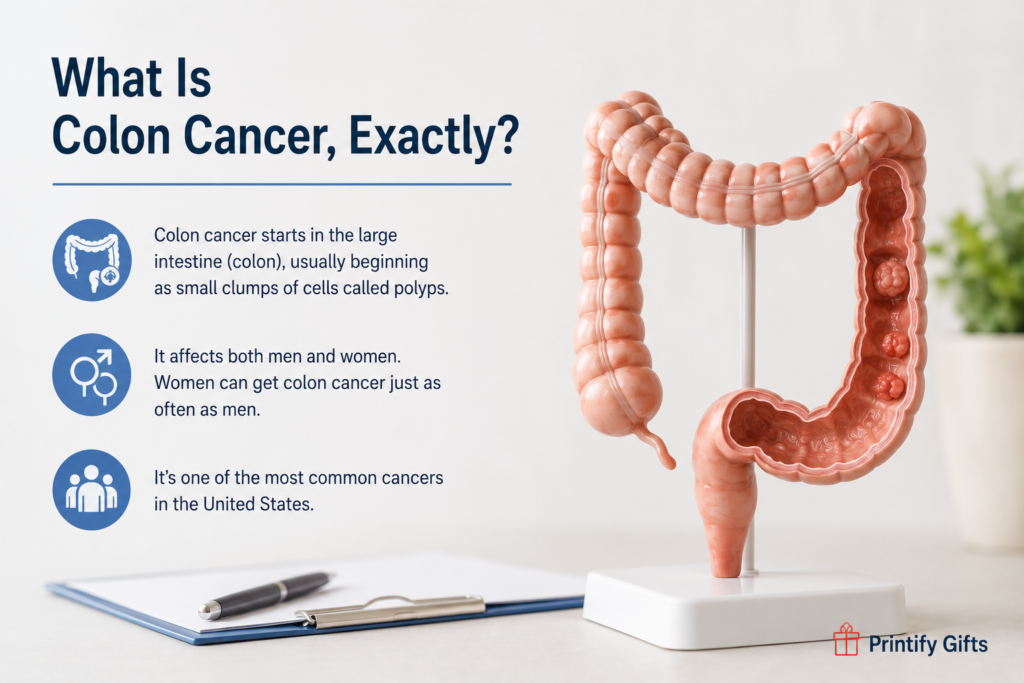
What Is Colon Cancer, Exactly?
Colon cancer starts in the large intestine (colon), usually beginning as small clumps of cells called polyps. Left undetected, some polyps can turn cancerous over several years. It’s part of a broader category often referred to as colorectal cancer, which includes both colon and rectal cancers, since they share many of the same colon cancer treatment approaches.
It’s one of the most common cancers diagnosed in the United States, affecting both men and women. And yes, can women get colon cancer just as often as men? Absolutely. While it’s sometimes assumed to be a “man’s disease,” colon cancer rates in women are nearly identical, and in some younger age groups, women are diagnosed at similar or slightly higher rates than men.
How Doctors Diagnose Colon Cancer Before Treatment Begins
Before any colon cancer treatment plan is created, doctors need a clear picture of the tumor’s size, location, and whether it has spread. This usually involves:
- Colonoscopy — the gold standard for direct visualization and biopsy
- Imaging scans — including CT, MRI, or PET scans to check for spread
- Blood tests — such as CEA (carcinoembryonic antigen) levels
- Biopsy and pathology — to confirm cancer type and grade
A common question people ask is can a CT scan detect colon cancer on its own? A CT scan is excellent for seeing whether cancer has spread to other organs, such as the liver or lungs, and for staging the disease, but it typically works alongside a colonoscopy and biopsy rather than replacing them. The biopsy is what actually confirms a cancer diagnosis before a colon cancer treatment plan is finalized.
Colon Cancer Treatment Options Explained
Once diagnosis and staging are complete, the colon cancer treatments are built around a few core options, often used in combination.
Surgery
Surgery is the primary treatment for colon cancer for most early- and mid-stage cases. The surgeon removes the tumor along with a margin of healthy tissue and nearby lymph nodes. In early-stage cases, surgery alone can sometimes be curative. For more advanced cases, surgery is often paired with chemotherapy before or after the procedure.
Chemotherapy
Chemotherapy is widely used for colon cancer methods. It uses drugs to kill cancer cells or stop them from multiplying, and may be used:
- Before surgery, to shrink a tumor (neoadjuvant therapy)
- After surgery, to eliminate remaining cancer cells (adjuvant therapy)
- As the primary treatment for cancer that has spread
Radiation Therapy
Radiation is used more often as a colon cancer treatment for rectal cancer than for colon cancer specifically, but it can still play a role, particularly for tumors that have grown into nearby tissue or organs, or to relieve symptoms in advanced disease.
Targeted Therapy and Immunotherapy
For certain genetic profiles, newer drugs can target specific mutations driving the cancer’s growth, while immunotherapy helps the immune system recognize and attack cancer cells. These colon cancer treatment options are typically considered for advanced or recurrent cases and are guided by genetic and biomarker testing.
Can Colon Cancer Be Cured Without Surgery?
This is one of the most common questions patients ask, and the honest answer is: it depends on the stage. For very early, localized tumors, some patients may be candidates for less invasive approaches, but surgery remains the most reliable path to removing the cancer entirely in most cases. For advanced or metastatic disease, colon cancer treatment shifts from “cure” toward long-term control using chemotherapy, targeted therapy, and sometimes radiation, with surgery playing a supporting role rather than the main one.
Colon Cancer Treatment by Stage
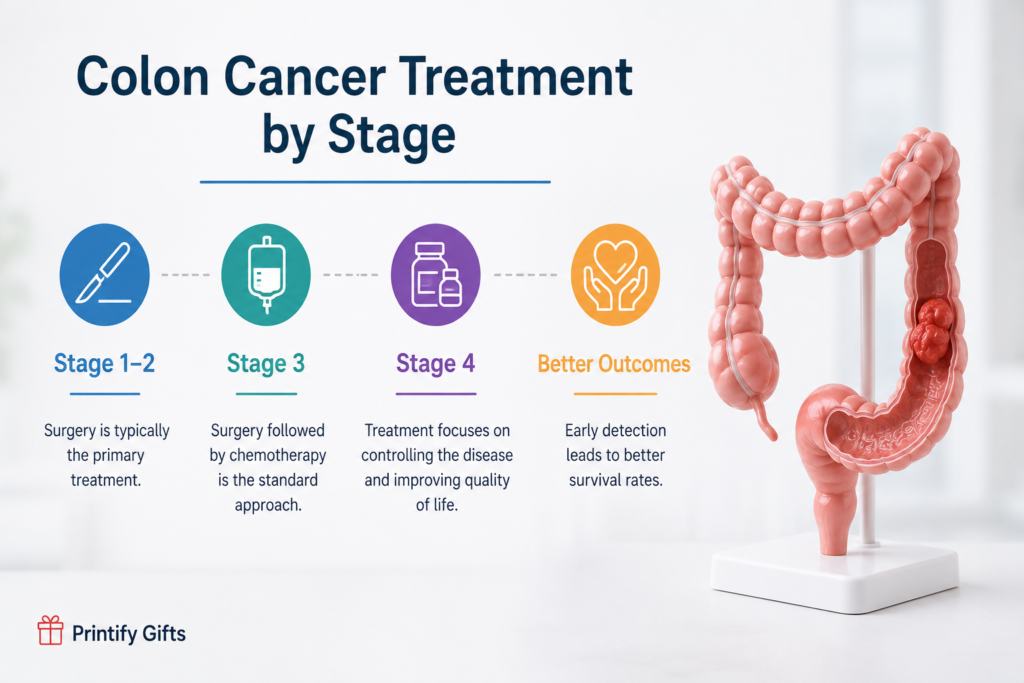
Treatment decisions are almost always guided by stage, which describes how far the cancer has spread at diagnosis.
Early-stage (Stage 1–2): Surgery is typically the primary, and sometimes only, colon cancer treatment needed. Chemotherapy may be added for stage 2 if certain high-risk features are present.
Stage 3: Surgery followed by chemotherapy is the standard colon cancer treatment approach, since cancer has reached nearby lymph nodes at this point.
Stage 4: Treatment becomes more about controlling the disease and extending quality of life, often combining chemotherapy, targeted therapy, and sometimes surgery to remove isolated spots of spread, such as in the liver or lungs.
Outcomes vary significantly by stage, which is why so many patients search for detailed colon cancer survival rates by stage, understanding these numbers can help set realistic expectations and guide treatment conversations with your care team.
What Is the Prognosis After Colon Cancer Treatment?
Prognosis depends heavily on how early the cancer is caught. Localized colon cancer has a significantly higher survival outlook than cancer that has spread to distant organs. That’s part of why regular screening matters so much — most colon cancers develop slowly, giving a real window for early detection before symptoms even appear, and before more aggressive colon cancer treatment becomes necessary.
For a deeper breakdown of what influences long-term outlook, this guide on the prognosis of colon cancer covers the factors doctors weigh most heavily, from tumor grade to lymph node involvement.
Recognizing the Signs Early
Catching colon cancer early dramatically changes the treatment path — and the outlook. Unfortunately, early-stage colon cancer often has few or no symptoms, which is why screening guidelines now recommend starting colonoscopies at age 45 for average-risk adults.
Knowing the signs of colon cancer before they become severe can be the difference between a straightforward surgery and a much longer colon cancer treatment road. Common warning signs include changes in bowel habits, unexplained weight loss, fatigue, and blood in the stool.
One symptom that surprises a lot of people: can colon cancer cause back pain? In more advanced cases, especially when a tumor is pressing on nearby structures or has spread, back pain can occur. It’s not usually an early symptom, but it’s one that shouldn’t be ignored if it’s persistent and unexplained.
Understanding Different Types and Locations
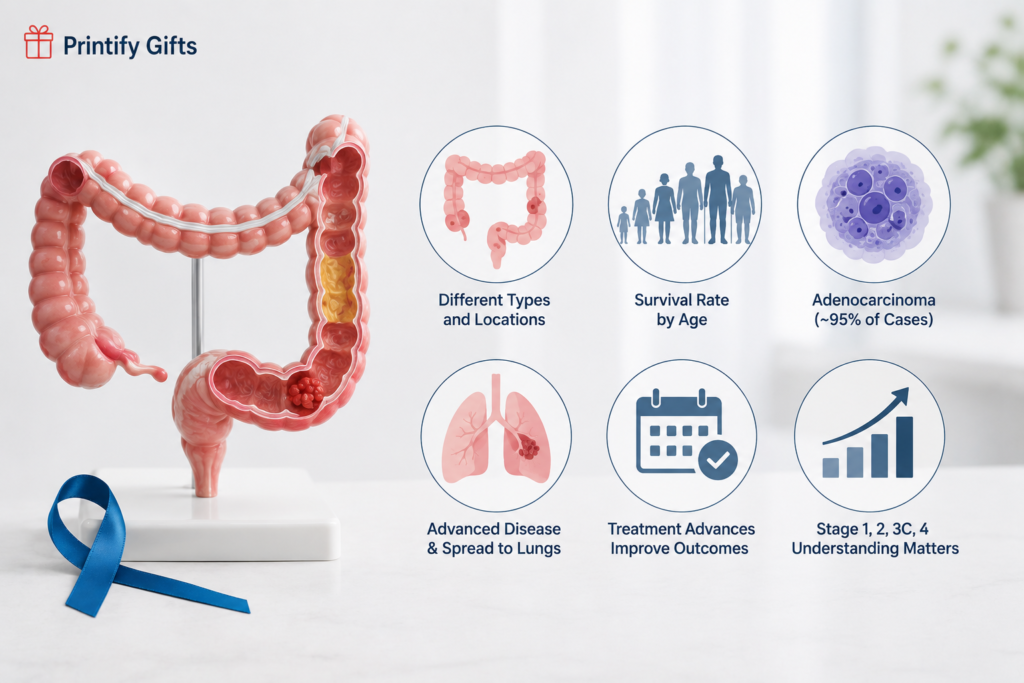
Colon cancer isn’t a single, uniform disease — its behavior, outlook, and colon cancer treatment approach can shift depending on where it starts and what type of cells are involved.
- Rectal cancer, which begins in the final few inches of the large intestine, is closely related to colon cancer, and rectal cancer survival rate by age follows a similar pattern, with earlier-stage diagnoses carrying a notably better outlook.
- Broader bowel cancer survival rate by age data (bowel cancer being the umbrella term covering both colon and rectal cancer) shows a consistent trend across age groups: earlier detection and treatment lead to significantly better long-term outcomes, regardless of a patient’s age at diagnosis.
- The vast majority of colon cancers are a type called adenocarcinoma, and adenocarcinoma survival rate colon statistics are what most staging data is actually based on, since it accounts for roughly 95% of all colon cancer cases.
- For those researching more advanced disease, terms like stage 4 colon cancer survival rate by age and colon cancer spread to lungs survival rate come up frequently — these numbers reflect cases where the cancer has metastasized, and while outcomes are more serious at this stage, ongoing advances in Colon cancer surgery and treatment continue to extend survival timelines.
If you’re trying to understand a specific diagnosis, say, stage 1 colon cancer survival rates versus stage 2 colon cancer survival rate, or a more complex case like stage 3c colon cancer survival rate by age, it’s worth discussing the exact numbers with an oncologist, since individual factors like overall health, tumor genetics, and response to treatment can shift outcomes beyond general statistics.
Life During and After Colon Cancer Treatment
Colon cancer treatment isn’t just physical, it’s a major life event that touches everything from work and finances to relationships and mental health. Fatigue, appetite changes, and emotional ups and downs are common during chemotherapy and recovery from surgery. Many patients find that support groups, counseling, and staying connected to loved ones make a measurable difference in how they cope.
Nutrition also becomes a bigger conversation than most patients expect going in. Chemotherapy and surgery can both affect appetite and digestion, so many care teams bring in a dietitian to help manage side effects and keep energy levels up during treatment. Gentle movement, when a doctor gives the green light, has also been shown to help with fatigue and overall mood during recovery.
This is also where small, thoughtful gestures matter more than people expect. Friends and family often don’t know how to help, and simple cancer awareness gifts, a comfort care package, a soft blanket for chemo days, or a personalized keepsake, can mean more than words ever could. Sites like Printify Gifts have made it easier to find and personalize these kinds of thoughtful, supportive gifts for someone going through treatment.
Awareness also plays a bigger role in prevention and early detection than most people realize. Community events tied to World Cancer Day awareness continue to push screening rates higher every year, helping more cases get caught before they progress to the point of needing more intensive colon cancer treatment.
Moving Forward With a Colon Cancer Treatment Plan
If you’re facing a colon cancer diagnosis, the most important next step is building a care team you trust typically an oncologist, a colorectal surgeon, and often a gastroenterologist working together. Ask questions, get a second opinion on your targeted therapy for colon cancer plan if it helps you feel confident, and don’t hesitate to bring a family member to appointments to help process information.
Colon cancer treatment has come a long way, and outcomes continue to improve as screening catches more cases early and treatment options expand. Whether you’re at the very beginning of this journey or supporting someone else through it, informed decisions, paired with a strong support system, make a real difference.
Frequently Asked Questions
What happens after a colon cancer diagnosis?
After diagnosis, doctors typically order additional imaging and lab work to determine the exact stage of the cancer. From there, a treatment team, often including an oncologist and colorectal surgeon builds a personalized colon cancer treatment plan based on the tumor’s size, location, and whether it has spread.
What is the life expectancy of a person with colon cancer?
Life expectancy varies significantly by stage at diagnosis. Early-stage, localized colon cancer has a much more favorable long-term outlook than cancer that has spread to distant organs. Age, overall health, and how well the cancer responds to treatment also play a major role.
How serious is colon cancer if caught early?
When caught early, colon cancer is often highly treatable, and surgery alone may be enough to remove it completely. This is why regular screening starting at age 45 is so strongly recommended, early detection dramatically improves outcomes and simplifies the colon cancer treatment process.
What is the biggest symptom of colon cancer?
There isn’t one single “biggest” symptom, but changes in bowel habits and blood in the stool are among the most commonly reported early signs. Unfortunately, early-stage colon cancer frequently causes no noticeable symptoms at all, which is why screening matters more than symptom-watching alone.
How fast does colon cancer spread?
Colon cancer usually develops slowly, often taking years to progress from a polyp to invasive cancer. However, once it becomes invasive, the speed of progression can vary from person to person based on tumor biology and individual health factors.
Where is colon cancer pain felt?
When pain does occur, it’s most commonly felt in the abdomen, often as cramping, bloating, or a persistent ache. In more advanced cases, pain can also radiate to the back, depending on the tumor’s location and whether it has spread.
There are no reviews yet.